Grace Comes First
I believe in God for many of the same reasons other people don't.
Suffering. Disease. Natural disasters. War. Betrayal. Child abuse. Rape. Senseless death.
How could there possibly be a God in light of all this? What kind of God would allow it?
I understand the question. I have asked it myself. But I also find myself asking the opposite question: if there is no God, what are we supposed to do with all this suffering? What does any of it mean? Where do we take our grief when there is nothing beyond it?
For me, the existence of suffering does not make God less believable. It makes the question of God more urgent.
Organized religion has given people plenty of reasons to distrust it. Religion is run by human beings, and human beings are ambitious, tribal, inconsistent, power-seeking, and frequently wrong. Religion has been used to justify cruelty, exclusion, war, greed, and control.
But for me, that is a separate question from whether God exists.
Before asking whether Christianity, Islam, Judaism, Hinduism, or any other religion is true, I think there is a more basic question: is there something beyond us at all? Is there a creator? Is there a source behind existence?
That was the question I spent years trying to answer.
I read arguments for belief and against it. The cosmological argument, the design or fine-tuning argument, the moral argument, and even the more abstract ontological argument all gave me reasons to take belief seriously. None of them settled the question for me on its own, but taken together they made belief seem more reasonable to me than disbelief.
The harder thing to dismiss was human experience. Across cultures and centuries, people have described moments of transcendence, conversion, answered prayer, overwhelming presence, or a sudden sense that reality is larger than what can be measured. I know those experiences can be interpreted in different ways, but I find it difficult to treat all of them as meaningless.
Once I became convinced that God exists, Christianity became the next question.
Again, I read everything I could.
What struck me first was that something extraordinary clearly happened around Jesus of Nazareth. A small Jewish movement centered on a crucified teacher spread rapidly through the Roman world and survived persecution, internal conflict, and the deaths of its earliest leaders.
The earliest Christians believed Jesus had risen from the dead, and they built their lives around that conviction. Some suffered and died rather than abandon it.
People can die for beliefs that are false, so martyrdom by itself proves nothing. But it does tell me these early believers were not casually inventing a story they themselves knew to be a lie.
Christianity also does not read to me like a legend that slowly emerged from some distant, unknowable past. The movement appeared quickly, centered on specific claims about a real person in a particular place and time. The earliest Christian writings come from the first generations of the movement, while people connected to the events were still alive.
I was also struck by details that do not look like the easiest choices for someone inventing a persuasive story in that culture. The Gospel accounts place women prominently among the first witnesses to the empty tomb, even though women's testimony generally carried less social authority in the ancient world.
None of this proves Christianity to me. But it makes it much harder for me to dismiss it as a fairy tale that gradually became religion.
The part of Christianity that speaks most directly to the problem of suffering, though, is not a philosophical argument. It is the cross.
Christianity does not describe a God who watches pain from a safe distance. It describes a God who enters it. Jesus experiences betrayal, humiliation, abandonment, physical agony, and death.
That does not explain every tragedy or answer every question I have about suffering. But it changes the kind of God I am being asked to believe in.
He is not untouched by what hurts us.
There is another reason Christianity speaks to me, and it may be the most important one.
Love sits at the center of it.
Christianity does not merely command people to love. It makes the extraordinary claim that love is part of the very nature of God. "God is love." The Christian understanding of the Trinity describes God as Father, Son, and Holy Spirit existing eternally in relationship. Love is not simply something God does. It is part of who Christians believe God is.
That matters to me when I look at Jesus.
Christians have not always been good at extending grace. We have a habit of sorting sins into categories, treating some as ordinary human weakness and others as reasons to keep people at a distance.
I don't see much support for that instinct in Jesus.
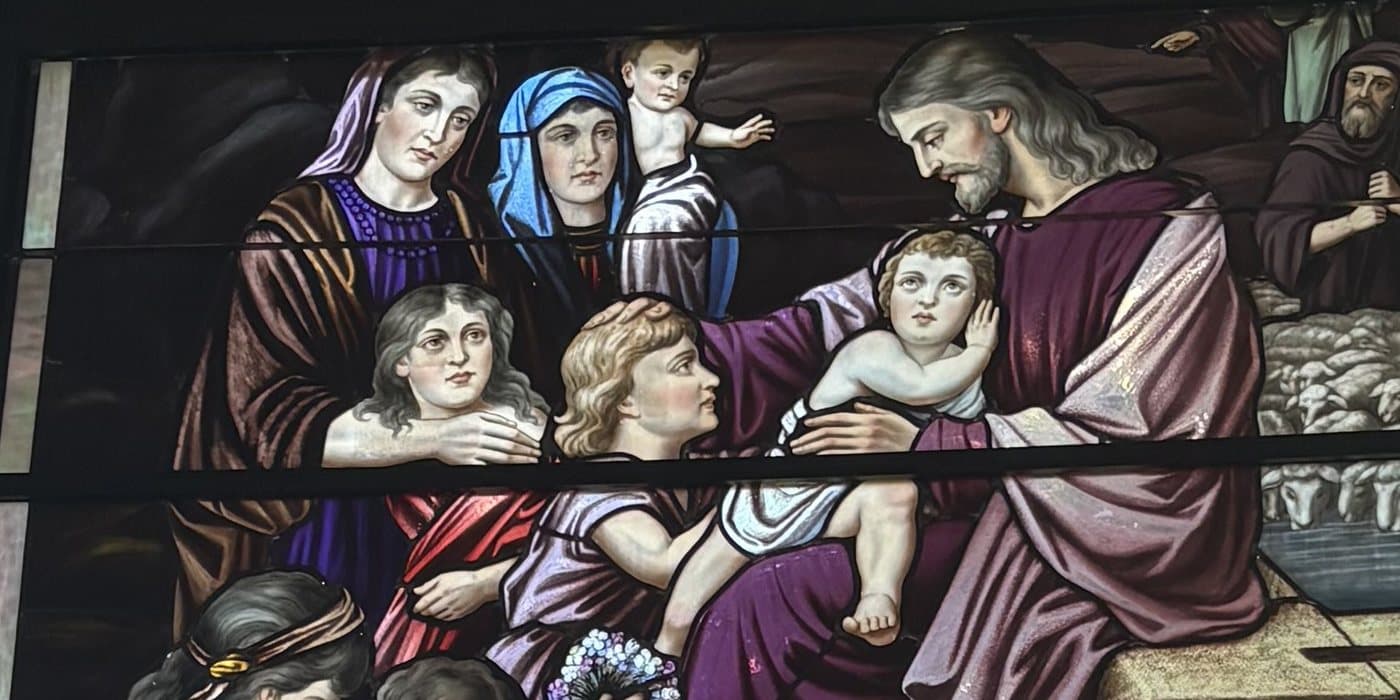
He repeatedly moves toward people respectable society would rather avoid: the poor, the sick, adulterers, tax collectors, prostitutes, people with damaged reputations, people who had already been judged.
He does not always tell them that everything they have done is fine.
But neither does He make moral perfection the admission price for coming near Him.
That distinction means a great deal to me.
Christianity does not tell me that God loves me once I become worthy of Him. It tells me that God loves me before I am worthy, while I am still capable of selfishness, lust, anger, dishonesty, pride, and every other way human beings hurt themselves and one another.
Christianity does not begin with me climbing toward God.
It begins with God coming toward me.
And then there is my own life.
I can look back and see many places where things could have gone badly, where my own choices could have carried me somewhere very different. Yet somehow I have been given more than I deserved.
I don't experience that as evidence that God has made my life easy. He hasn't.
I experience it more as a sense that He has not given up on me.
There is something deeply comforting to me in believing that God knows every failure, every selfish decision, every wrong turn, and still wants something good for me. Grace, to me, feels a lot like being loved by someone who knows exactly who you are and stays anyway.
There have also been moments when belief became something more than an argument.
When my oldest son was baptized, I cried. I wasn't expecting to. I had watched him grow up, make his own choices, become his own person, and then I watched him publicly choose something that had become deeply important to me.
For a few minutes, belief was not about cosmology or ancient manuscripts.
It was my son standing in the water.
I feel something related when I play music with the worship team at church. I know music can create emotion all by itself, and I don't confuse every strong feeling with proof of God. But there are moments when I am playing and singing with other people when I feel unusually connected: to them, to something beyond myself, and to the part of me that believes I was made for more than simply getting through another day.
None of these things, by itself, proves God to me.
Not the philosophical arguments.
Not history.
Not the cross.
Not my son's baptism.
Not the feeling I sometimes have while playing worship music.
Not even the strange sense, looking back over my life, that I have been forgiven and carried farther than I deserved.
It is the accumulation of them.
They all seem to point in the same direction: toward a God who enters suffering, who moves toward broken people, who does not wait for us to clean ourselves up before loving us, and who does not give up on us when we fail.
That is the God I find believable.
Not because the world is free of suffering, but because it isn't.
Not because human beings are particularly good, but because we aren't.
Not because I have earned His attention, but because I haven't.
Grace comes first.